


DIN Fittings
DIN Sanitary Fitting Identification Guide
Metric reference guide for identifying DIN 11851 sanitary fittings. Use digital calipers to measure and match your fittings to the correct DIN size.
⚠ Important: DIN vs. SMS Fittings
If your measurements don't match the tables below, your fittings may be SMS (Svensk Mejeristandard) rather than DIN. SMS and DIN fittings are NOT interchangeable despite looking similar. Always verify with caliper measurements before ordering replacement parts.
How to Measure DIN Fittings
Use a digital caliper set to millimeters (mm) to measure the three critical dimensions (A, B, C) on your fitting. Match your measurements to the appropriate table below to identify the correct DIN size.
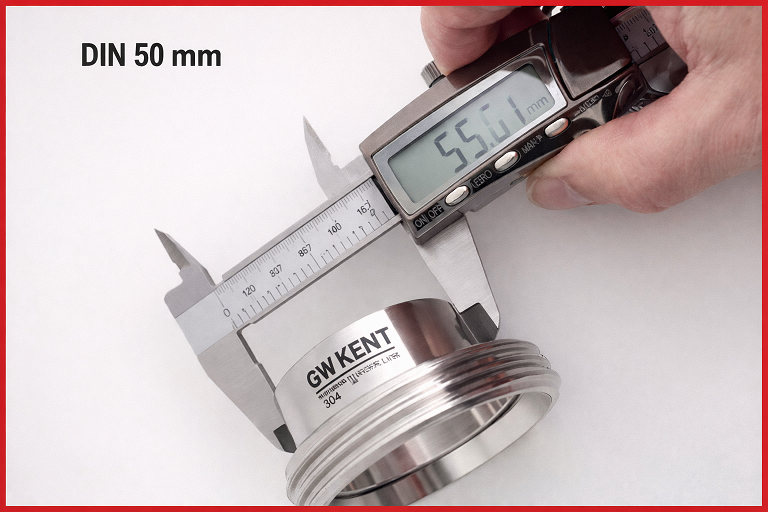
Measure dimension A - the outer diameter of the fitting flange
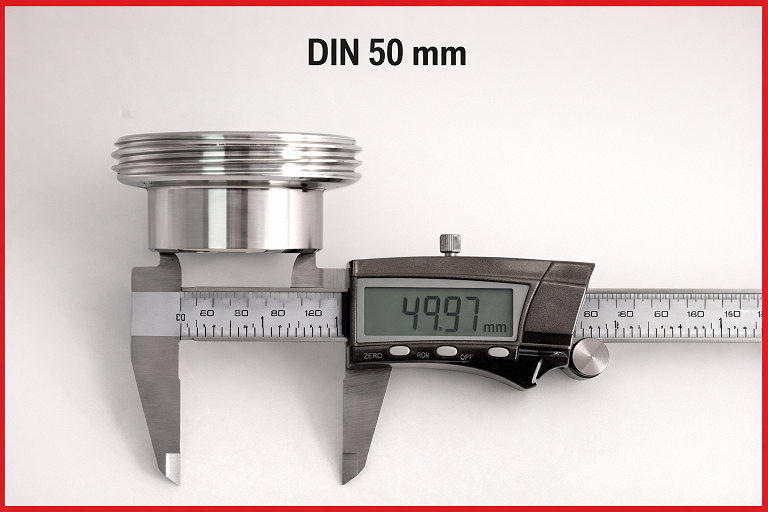
Measure dimension B - the thread outer diameter or liner diameter
DIN Male Threaded Ferrule Dimensions
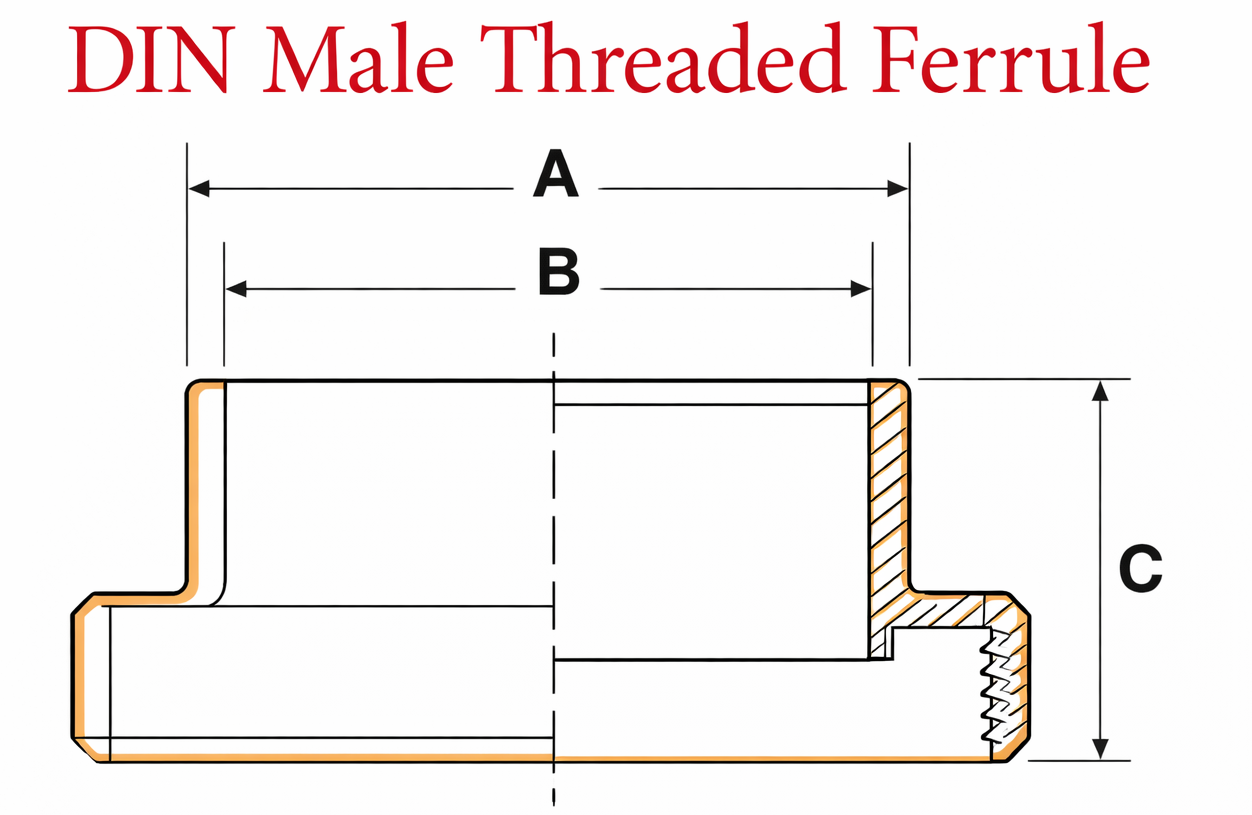
DIN Male Threaded Ferrule - Measurement Points
| DIN Size | A (mm) | B (mm) | C (mm) |
|---|---|---|---|
| 15 | 21 | 16 | 21 |
| 20 | 25 | 20 | 24 |
| 25 | 31 | 26 | 29 |
| 32 | 37 | 32 | 32 |
| 40 | 43 | 38 | 33 |
| 50 | 55 | 50 | 35 |
| 65 | 72 | 66 | 40 |
| 80 | 87 | 81 | 45 |
Measurement Guide - Male Threaded Ferrule:
- A: Outer diameter of the flange
- B: Outer diameter of the threads (measure at the thread peaks)
- C: Length from flange face to end of threads
DIN Female Liner Dimensions
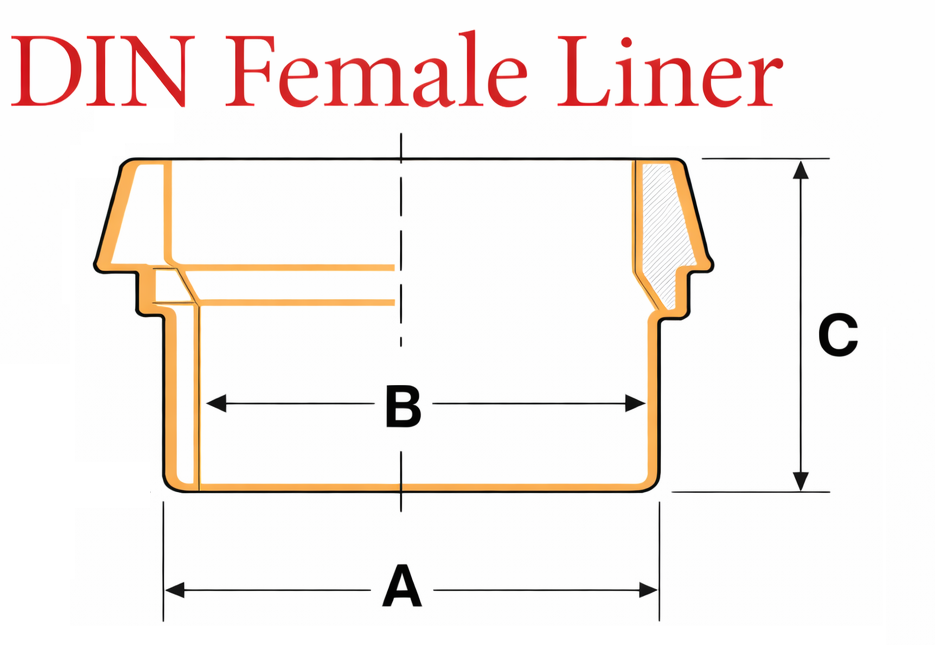
DIN Female Liner - Measurement Points
| DIN Size | A (mm) | B (mm) | C (mm) |
|---|---|---|---|
| 15 | 21 | 16 | 17 |
| 20 | 25 | 20 | 18 |
| 25 | 31 | 26 | 22 |
| 32 | 37 | 32 | 25 |
| 40 | 43 | 38 | 26 |
| 50 | 55 | 50 | 28 |
| 65 | 72 | 66 | 32 |
| 80 | 87 | 81 | 37 |
Measurement Guide - Female Liner:
- A: Outer diameter of the flange
- B: Inner diameter of the liner body
- C: Length from flange face to end of liner
What are DIN Sanitary Fittings?
DIN 11851 is a German standard (Deutsches Institut für Normung) for sanitary threaded connections used in food, beverage, dairy, and pharmaceutical processing. DIN fittings use a union nut system with a male threaded ferrule, female liner, and gasket to create a hygienic, leak-tight seal.
DIN Connection System Components:
Male Threaded Ferrule
External threads that screw into the union nut. Typically welded to pipe or equipment.
Female Liner
Smooth internal bore with no threads. Sits inside the male ferrule with a gasket between them.
Union Nut
Threaded ring that tightens onto the male ferrule, compressing the gasket for a seal.
Gasket
Food-grade seal (typically EPDM or silicone) that sits between male and female components.
DIN vs. SMS: What's the Difference?
Both DIN and SMS are European metric standards for sanitary fittings, and they look very similar at first glance. However, they have different dimensions and are not interchangeable.
| Feature | DIN 11851 | SMS 1145 |
|---|---|---|
| Origin | German standard | Swedish dairy standard |
| Thread Pitch | 2mm pitch | Different pitch |
| Dimensions | See tables above | Different measurements |
| Common in | Europe, some U.S. imports | Scandinavia, dairy industry |
| Interchangeable? | NO - Do not mix! | |
⚠ Warning: Attempting to connect DIN and SMS fittings will result in leaks, cross-threading, and damaged components. Always verify your fitting type with caliper measurements before ordering replacements.
Common DIN Fitting Applications
DIN fittings are common in imported European brewing and processing equipment:
🍺 European Brewing Equipment
Many German, Italian, and Eastern European brewhouses use DIN fittings on pumps, heat exchangers, and process piping
🥤 Import Distilling Systems
Copper pot stills and process equipment from Europe commonly feature DIN connections
🍲 Dairy Processing
Pasteurizers, separators, and milk transfer systems often use DIN standard connections
📦 Food Manufacturing
Import food processing equipment may use DIN fittings for sanitary connections
Step-by-Step Identification Process
Determine Male or Female
Male fittings have external threads. Female fittings (liners) have a smooth bore and no threads.
Measure with Calipers in Millimeters
Use digital calipers set to mm. Measure dimensions A, B, and C according to the diagrams above.
Match to Reference Table
Compare your measurements to the appropriate table (male or female). All three dimensions should match a single DIN size.
Verify Thread Pitch (Male Only)
DIN fittings use 2mm thread pitch. If measurements match but threads feel wrong, you may have SMS fittings.
DIN Fitting Installation Tips
- Always use a gasket - DIN connections require a food-grade gasket (EPDM, silicone, or Viton) for proper sealing
- Don't over-tighten - Hand-tight plus a quarter turn with a wrench is usually sufficient. Over-tightening can damage the gasket and threads
- Inspect gaskets regularly - Replace gaskets that show compression set, tears, or wear. Gaskets are inexpensive insurance against leaks
- Support both sides when tightening - Use two wrenches to avoid putting torque on connected equipment
- Clean sealing surfaces - Wipe gasket contact surfaces clean before assembly. Debris will prevent proper sealing
- Keep union nuts and ferrules matched - Don't mix sizes or standards. Each connection should be complete DIN
- Check thread condition - Damaged or cross-threaded fittings won't seal properly and should be replaced
Need DIN Fittings or Gaskets?
GW Kent stocks DIN sanitary fittings, union nuts, and food-grade gaskets for brewing, distilling, and food processing equipment.